Invited Talks
Ivan Oseledets – Dean of the Faculty of Artificial Intelligence at Lomonosov Moscow State University, Director of the Artificial Intelligence Research Institute (AIRI).

Professor Ivan Oseledets is a prominent Russian mathematician and computer scientist, currently serving as the Dean of the Faculty of Artificial Intelligence at Lomonosov Moscow State University and the Director General of the AIRI Institute. He was born in Moscow on July 6, 1983, into a family of mathematicians, and from an early age demonstrated a profound aptitude for the sciences.
He graduated with honors from the Moscow Institute of Physics and Technology (MIPT) in 2006 and completed his postgraduate studies at the Institute of Numerical Mathematics of the Russian Academy of Sciences, earning his Candidate of Sciences (PhD) in 2007 and his Doctor of Sciences (Habilitation) in 2012. In 2013, he joined the Skolkovo Institute of Science and Technology (Skoltech), where he is a Full Professor and Director of the Center for Artificial Intelligence Technologies.
Professor Oseledets is internationally recognized for his groundbreaking work on tensor decompositions, particularly the development of the tensor train (TT) format. His contributions to computational mathematics have provided efficient methods for solving high-dimensional problems in physics, chemistry, biology, and data analysis. His research has received wide acclaim, including the Russian President’s Award for Young Scientists in 2018, a Humboldt Research Award, and he is consistently ranked among the top 2% of most-cited scientists worldwide. He is also actively involved in the academic community, serving as an associate editor for leading journals and as an area chair for top-tier conferences such as NeurIPS, ICML, and ICLR.
Ivan Tyukin – Head of the Laboratory for Reliable, Adaptive, and Trustworthy Artificial Intelligence at the Skoltech AI Center.
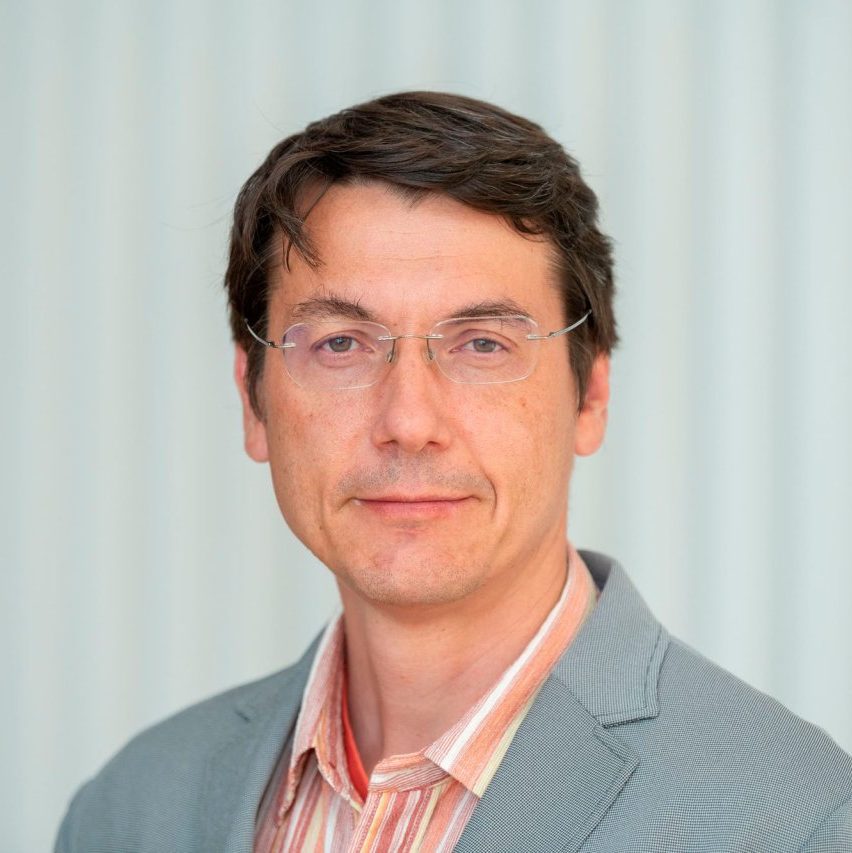
Professor Ivan Tyukin is a Full Professor and the Head of the Laboratory for Reliable, Adaptive, and Trustworthy Artificial Intelligence at the Skoltech AI Center . He holds a Doctor of Sciences (Habilitation) degree, which he received in 2006. His academic career has been international in scope; after completing his PhD in 2001, he worked as a Research Scientist at the RIKEN Brain Science Institute in Japan. He then moved to the United Kingdom, where he held various positions at the University of Leicester, including Professor of Applied Mathematics, and later joined the Department of Mathematics at King’s College London. Additionally, he has held an adjunct professorship at the Norwegian University of Science and Technology (NTNU).
Professor Tyukin is an internationally recognized expert in the mathematical foundations of artificial intelligence, with research interests spanning machine learning, mathematical modelling, adaptive systems, and data analytics. His recent work focuses on developing a theory and practice for creating AI systems that are provably robust, resilient, certifiable, and trustworthy, especially for critical and socially significant applications such as medicine, law, and security. This includes addressing challenges related to adversarial attacks, data inconsistencies, and bias. In 2025, he received a prestigious grant from the Russian Science Foundation to establish a new laboratory dedicated to trustworthy AI. He has a broad network of collaborators, which includes leading researchers from the UK, Japan, and China. In 2026, he was appointed as a co-head of the International Joint Laboratory of AI for Industry (LAII), established between Skoltech and China’s Qingdao University of Science and Technology. He is active in the academic community, serving as an editor for the journal Communications in Nonlinear Science and Numerical Simulations.
Title: Multidimensional data in questions and answers.
Vadim Turlapov – Professor at the Department of High-Performance Computing and System Programming within the Institute of Information Technology, Mathematics and Mechanics at UNN.
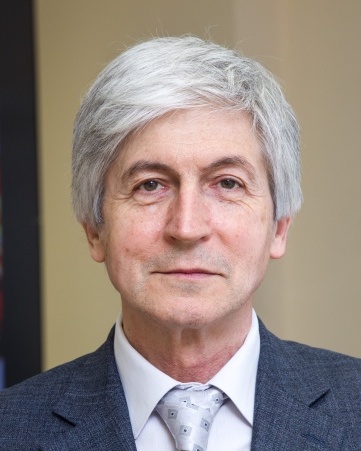
Professor Vadim Turlapov’s research interests span a wide range of computer graphics topics, including high-performance computing, applied geometry and computer-aided geometric design, computational biomedicine, and theory of mechanisms and machines. Within UNN, he leads the Laboratory of Computer Graphics and Multimedia and serves as a leading researcher at the Research Center for Artificial Intelligence, specifically in the laboratory “Cloud Technologies of Trusted Artificial Intelligence”.
Turlapov’s publication record includes over 31 works indexed in ORCID, with recent contributions appearing in journals such as Entropy, Programming and Computer Software, and Technologies. His research has addressed diverse applications, from brain tumor segmentation using cascaded U-Net architectures to explainable AI diagnostics for plant stress detection and AI diffusion models for automating electron microscopy data labeling. He has also published on GPU-based ray tracing, constructive solid geometry visualization, and cardiac electrophysiology simulation.
Title: Trusted AI Processing of Data Streams in Healthcare as an Example for Other Domains.
A systematic definition of trusted AI and its analysis is provided. Data streams such as disease diagnosis,
treatment, and rehabilitation, implemented by healthcare, are analyzed, as well as the key regulations,
documents, and guidelines governing these streams. It is established that the primary governing
regulation is the Ministry of Health’s Clinical Guidelines for disease types (nosologies), which are
implemented by medical personnel for each patient. The primary source of patient data is the electronic
medical record (EMR), which is supplemented by the results of data processing (medical research) at
flow nodes. The tools for processing data using AI models, the status of explainable AI, and Trusted AI
established for clinical guidelines, the role of LLM, and the implementation details AI agents of the
Doctor and Patient are discussed.
Alexey Neznanov – PhD, Senior Data Scientist at STISS, Associate professor at Faculty of Computer Science, NRU HSE.
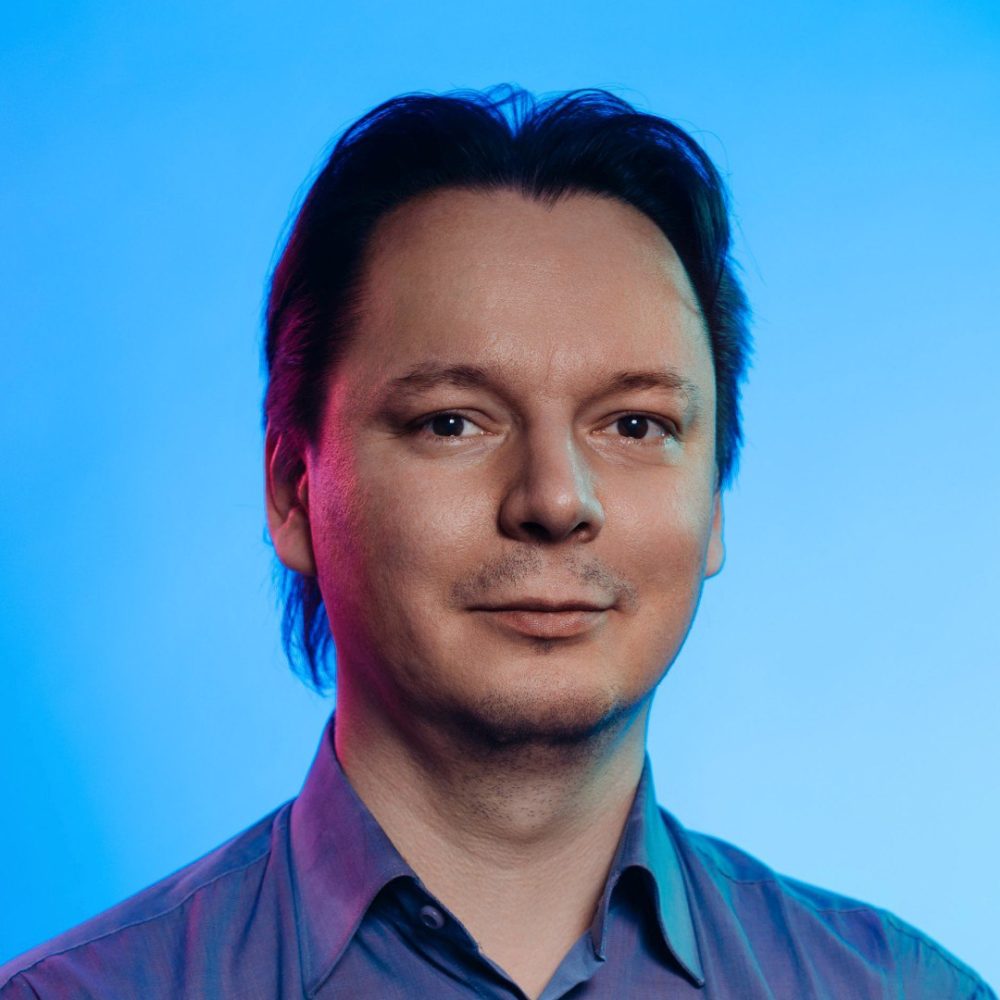
Dr. Alexey Neznanov is a Candidate of Technical Sciences and Associate Professor at the School of Data Analysis and Artificial Intelligence, Faculty of Computer Science, National Research University Higher School of Economics (HSE), where he has worked since 2008. He also serves as a Senior Researcher at the International Laboratory for Intelligent Systems and Structural Analysis and works as a Senior Data Scientist at STISS. He is a member of IEEE, the Russian Association for Artificial Intelligence, and the National Base of Medical Knowledge.
His research interests encompass data mining with a focus on Formal Concept Analysis, graph mining, and text mining, as well as applied graph theory emphasizing symmetry, complexity, and similarity of graph models. In the medical informatics domain, he works on clinical informatics and mathematical support for randomized controlled trials, having led the information-analytical department at the Dmitry Rogachev Federal Research Center for Pediatric Hematology, Oncology, and Immunology from 2012 to 2015. He has authored more than 65 scientific publications and developed over 10 original courses, including topics on ontologies and semantic technologies, database design, and human-machine interaction.
Title: Pillars and Foundations of Object-Attribute Data: A Journey from Philosophy to Visualization, Venturing into Physics, Mathematics, Logic, and Programming.
This talk explores the conceptual and methodological foundations of object-attribute data, tracing their evolution from philosophical and logical roots to modern visualization and machine learning. It systematizes terminology around entities, attributes, properties, and qualities, and addresses ontology, epistemology, and the hermeneutic circle in IT development and industry practice. Topics include set-theoretic foundations, Formal Concept Analysis, concept lattices and association rules, data modeling levels, data quality, formats and protocols, the relational and entity-relationship models versus the object-oriented paradigm, tabular and graph models, metadata ontologization, SQL, and modern data analysis tools such as R, Python, Pandas, and Polars. The final part covers data visualization, machine learning, data labeling, hybrid AI systems, and AI-driven visualization tools, concluding with gaps in systematization and the role of controlled thesauri and ontologies for semantic compatibility and interoperability.
Maria Pruzhinskaya – an astrophysicist and researcher at the Sternberg astronomical institute of Lomonosov Moscow State University.
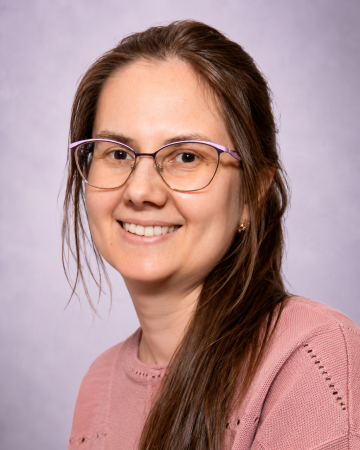
Maria Pruzhinskaya received her PhD in astrophysics from Lomonosov Moscow State University in 2014, with a thesis devoted to supernovae, gamma-ray bursts and the accelerating expansion of the Universe.
Her scientific interests include supernovae and observational cosmology, time-domain astronomy, and machine learning for astronomical data analysis, with a particular focus on anomaly detection and the discovery of rare astrophysical objects in large astronomical surveys.
Maria is a co-founder of the SNAD project, which explores machine-learning methods for finding unusual and previously unknown objects in large astronomical datasets, and a member of the Fink community broker, designed for real-time processing and scientific analysis of astronomical alert streams from the Zwicky Transient Facility and the Vera C. Rubin Observatory Legacy Survey of Space and Time.
She supervises students at Bachelor’s, Master’s and PhD levels and regularly presents her research at international conferences and workshops.
Title: Astronomical Alert Brokers in the LSST Era.
Modern wide-field astronomical surveys are changing observational astronomy from the study of static catalogues to the analysis of continuous streams of transient, variable, and moving sources. The Zwicky Transient Facility already produces hundreds of thousands of alerts per night, and the Vera Rubin Observatory Legacy Survey of Space and Time is now increasing both the volume and the scientific complexity of such data streams. In this regime, individual users cannot inspect all detections directly, and alert brokers become a necessary intermediate layer between surveys and the scientific community. This role is especially important for Rubin/LSST, whose full alert stream is public from the beginning.
In this talk, I will explain what astronomical alert brokers are, why they are needed, and how they transform raw alert streams into scientifically useful information. The main focus will be on the Fink broker, which processes ZTF and LSST alerts in real time. I will discuss how brokers enrich alerts with contextual information, apply machine-learning tools, distribute selected candidates to experts, and support follow-up observations. Special attention will be given to anomaly detection in broker environments. Unlike standard classification, anomaly detection aims to identify rare, unexpected, or scientifically interesting sources that may not belong to predefined classes. I will compare several approaches developed in modern brokers, including ALeRCE, ANTARES, Lasair, and Fink, and discuss why expert feedback and follow-up observations are essential for turning algorithmically selected anomalies into astrophysical results.
Alexander Ponomarenko – PhD, Associate Professor at the Department of Applied Mathematics and Informatics, HSE University – Nizhny Novgorod, Research Fellow at the Laboratory of Algorithms and Technologies for Networks Analysis (LATNA), Co-Chair of DAMDID-2026.
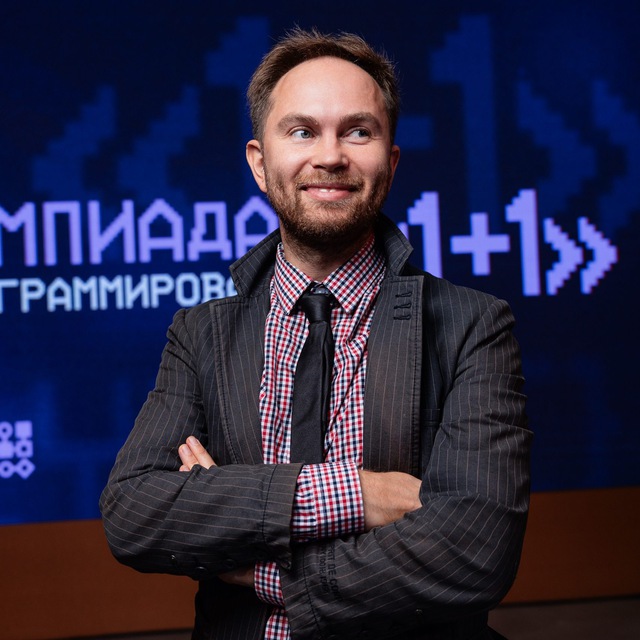
Dr. Alexander Ponomarenko graduated from the Faculty of Computational Mathematics and Cybernetics of Lobachevsky State University of Nizhny Novgorod in 2007 and received his Candidate of Sciences (PhD) degree in 2018. He has been with HSE University since 2013. Dr. Ponomarenko is a pioneer of graph-based nearest neighbor search. At MERA Labs, he led the Nizhny Novgorod group of researchers who rejected the long-dominant tree-based paradigm in favor of search on graphs. Their work produced the widely cited Navigable Small World (NSW) algorithm, which laid the groundwork for the Hierarchical Navigable Small World (HNSW) method. Graph-based search algorithms of this kind are now widely used in vector databases, AI systems, and Retrieval-Augmented Generation (RAG) pipelines. His recent work focuses on the theory of navigable graphs, including a proof that greedy search in a one-dimensional model of NSW takes a logarithmic number of steps, as well as on algorithms for merging HNSW graphs. His achievements have been recognized with the Russian President’s Scholarship for PhD students, the Razuvaev Scholarship, the Ilya Segalovich Award (Yandex), and the IBM PhD Fellowship Award.
He also collaborates with the Hydroacoustics Laboratory of the Institute of Applied Physics of the Russian Academy of Sciences (IAP RAS), applying machine learning to acoustic ocean research. His other research interests include audio signal analysis, discrete and logistics optimization, and network analysis. He has authored 32 scientific publications with over 1,000 citations.
Title: Approximate Vector Search at Billion Scale.
Vector search has become core infrastructure for modern AI. Recommender systems, semantic search engines and retrieval-augmented generation (RAG) pipelines all rely on quickly finding the nearest neighbors of a query among billions of high-dimensional vectors. Exact search at this scale is out of reach, and even storing the data is a challenge, so every practical system trades a small loss in accuracy for orders of magnitude in speed and memory. This talk gives an overview of how modern systems achieve this, with a focus on navigable graphs. It covers both the practical engineering of billion-scale indices and the theory explaining why graph-based search works, and closes with open problems in the field.